Sovereign data means AI runs on your terms.

Every prompt can move data across a border or carry knowledge out of the company. Secuvy shows what a model would take, tags only what you allow, and proves the rest stayed inside.

See everything. Decide what crosses. Prove it.

Two steps, running continuously. Your files never move, and nothing Secuvy learns leaves your environment.

Every file, known before any model sees it.

Secuvy connects to your data sources and classifies files where they live, by sensitivity, by jurisdiction, and by what a model would absorb. You see exactly what is safe to share, what must stay in its region, and what is the company. Secuvy classifies, you confirm, it learns.

The Sankey maps every source to its sensitivity, jurisdiction, and business tags, making the data that may cross a boundary and the data that must stay visible in one view.
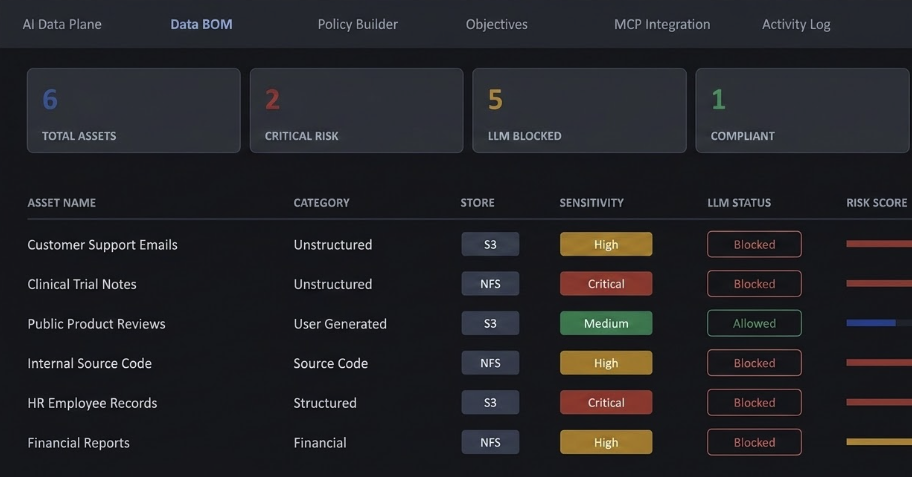
Secuvy Data Bill of Materials view showing pipeline data use, exclusions, and jurisdiction evidence
The data bill of materials shows what each pipeline used, what was held out, and why, with evidence that controlled data stayed in its required jurisdiction.

A Data Bill of Materials, always current.

For every pipeline: what fed it, what was held out, and why. Proof that data stayed in its jurisdiction and your knowledge stayed in the company, ready for a regulator, an auditor, or the board.

Explore the data bill of materials →

Real-world use cases

Two people with tablets in a server room

Know what you hold

Secuvy discovers and classifies data across cloud, on-premises, and SaaS, including the IP, CUI, and ITAR records that rule-based tools miss.

Pins and string connecting countries on a map

Tags that travel with the data

Residency, jurisdiction, and sensitivity are tagged into the data itself, so any system or agent that reads it can check the tag first.

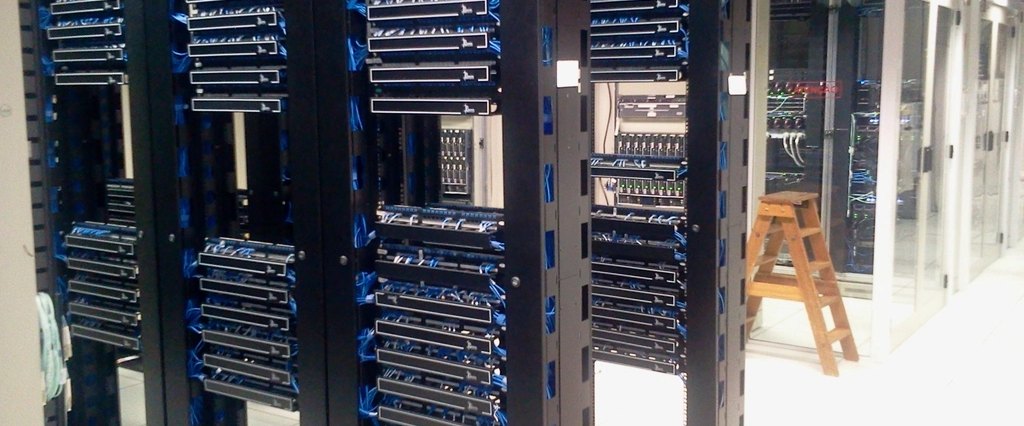
Server racks with blue network cabling

Deploy on your terms

On-premises, cloud, or air-gapped. Secuvy tags what may feed internal models and what may feed third-party models, and your policies decide.

Empty boardroom with a long table

Prove it, continuously

Always-current classification and a data bill of materials show what fed every AI pipeline, ready when a regulator or the board asks.

Does using AI mean giving my data away?

It can, if nothing stands between your files and the pipelines. Secuvy classifies and tags data in place: your policies decide what each pipeline may use, the learning stays inside your environment, and the data bill of materials proves what fed each AI and what was held out.

What is AI sovereignty?

Control over your own data and technical decisions: what a model may read, where data may travel, and who captures the learning that your use of AI creates. Secuvy provides the sight and the proof that control requires.

What is the Reverse Information Paradox?

The name Microsoft's CEO gave to the one-way flow of the AI era: providers learn how their customers operate with every interaction, so buyers pay with money and again with proprietary knowledge. The answer is a boundary you control. Secuvy shows what a model would take and tags only what you allow.

How does Secuvy keep data inside its jurisdiction?

Files are classified where they live, by sensitivity and geography, and your policies set what each pipeline may use. Nothing is moved or copied to be analyzed, and the data bill of materials records where every input lived and what was held out.