Secuvy

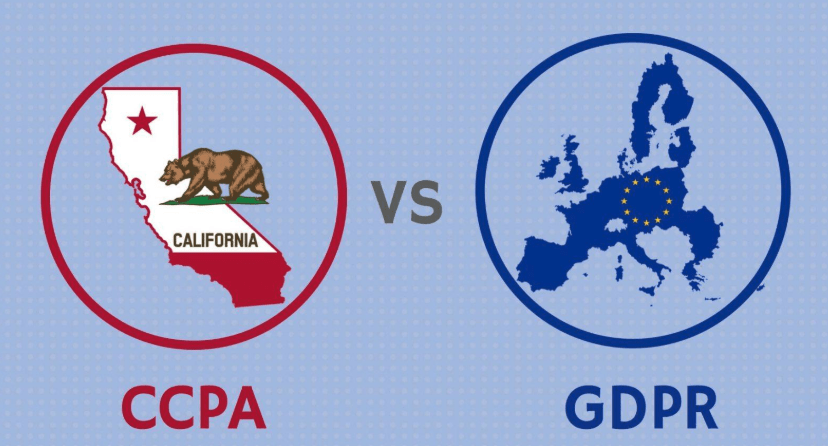
CCPA vs GDPR

ccpa-gdpr

CCPA vs GDPR

Regulation GDPR CCPA
Enforcement Date May 25th, 2018 Jan 1st, 2020
Who needs to comply Any Business that collects or processes the data of EU citizens and residents Any business storing or processing California residents’ information
Penalties Upto 4% of the Company Annual Gross Revenue or 20M euros $7500 per incident, per person
Opt-out Right for Personal Information Sale GDPR does not include a specific right to opt-out of personal data sales Must include a “Do not sell my personal information” link in a clear and conspicuous location on a website homepage.
Must not request reauthorization to sell a consumer’s personal information for at least 12 months after the person opts-out
Children GDPR default age for consent is 16, although individual member state law may lower the age to no lower than 13 Children aged 13-16 can directly provide consent. Children under 13 require parental consent.
Children’s Online Privacy Act (COPPA) still apply on top of the CCPA’s requirement
Right to Disclosure Data Subjects have a right to access their personal data, including receiving a copy and to obtain certain information about the data controller’s processing Consumers have a right to request disclosure of their personal information, and to receive additional details regarding the personal information a business collects and its use purposes, including any third parties with which it shares information
Right to Deletion/Erase Data Subjects have the right to request erasure of personal data A consumer has the right to deletion of personal information a business has collected, subject to certain exceptions
Right to Restrict Processing Right to restrict processing of personal data, under certain circumstances None, other than right to opt-out of personal information sales


Related Blogs

June 02, 2026

By Prashant Sharma, CTO, Secuvy When OpenAI open-sourced its Privacy Filter (OpenAI Privacy Filter GitHub), the enterprise AI community took notice — and rightly so....

June 02, 2026

AI Infrastructure Fails When the Wrong Data Enters the Pipeline Organizations are pushing hard to scale their AI initiatives to drive faster decisions, improve operational...

April 19, 2026

If your organization is running AI agents or has connected LLMs to internal knowledge bases, there’s a governance gap already open inside your AI program,...

April 15, 2026

There is a number that keeps appearing in enterprise AI conversations, and most teams would rather not talk about it.  56% of enterprise AI proof-of-concept...

April 12, 2026

Enterprises spent years treating data sovereignty as a geography problem. But it’s always been an intelligence problem, and enterprises just didn’t know it until AI...

April 09, 2026

Most enterprise AI teams are solving the wrong problem first. They’re optimizing storage speed for data that was never safe or ready to use. At...

April 06, 2026

A company building the world’s most capable AI model left thousands of sensitive internal files in a publicly searchable data store. No sophisticated attacker was...

February 28, 2026

“HUMANS, as you know, make MISTAKES.” And that single fact is enough to unravel everything your ChatGPT Enterprise license promised to protect. OpenAI explicitly promises...

February 22, 2026

If you believe ChatGPT Enterprise, Microsoft Copilot, and Claude are secure for enterprise use, consider these uncomfortable facts: ChatGPT has already suffered a bug that...

February 18, 2026

ChatGPT Enterprise prevents OpenAI from training on your data, but it doesn’t stop sensitive data exposure, unauthorized transmission, or regulatory violations. The moment confidential or...

February 14, 2026

“ALERT: SENSITIVE INFORMATION IS LEAKING FROM YOUR SOURCE TO ANOTHER!” Your over-helpful bot would never say that. That’s because AI does exactly what it is...

February 10, 2026

Did you know that Samsung banned ChatGPT & the use of Gen-AI company-wide in 2023? This decision was undertaken as an internal security incident where...

November 15, 2024

Using Data Classification for Effective Compliance When working toward ISO 42001 compliance, data classification is essential, particularly for organizations handling large amounts of data. Following...

November 12, 2024

Laying the Groundwork for ISO 42001 Compliance Starting the journey toward ISO 42001 compliance can seem complex, but with a strategic approach, companies can lay...

November 07, 2024

A Data Subject Access Request (DSAR) is the means by which a consumer can make a written request to enterprises to access any personal data...

November 07, 2024

VRM deals with managing and considering risks commencing from any third-party vendors and suppliers of IT services and products. Vendor risk management programs are involved...

October 30, 2024

With organizations storing years of data in multiple databases, governance of sensitive data is a major cause of concern. Data sprawls are hard to manage...

October 30, 2024

 There has been a phenomenal revolution in digital spaces in the last few years which has completely transformed the way businesses deal with advertising, marketing,...

October 30, 2024

In 2023, the California Privacy Rights Act (CPRA) will supersede the California Consumer Privacy Act (CCPA), bringing with it a number of changes that businesses...

October 09, 2024

For years, tech companies have developed AI systems with minimal oversight. While artificial intelligence itself isn’t inherently harmful, the lack of clarity around how these...

Prepare for Assessments and Get AI-Ready

Gain visibility into sensitive data, reduce exposure, and produce evidence you can trust without months of deployment or manual effort.